
In competency-based medical education (CBME), direct observation tools like the mini-CEX and DOPS capture what a trainee in real time. Yet clinical competence goes beyond observable bedside actions or surgical technique. It requires sound diagnostic reasoning, ethical judgment, and the ability to justify your choices when cases turn complex or uncertain. That is where the Case-Based Discussion (CBD) fits into workplace-based assessment (WBA).
What is a Case-Based Discussion?
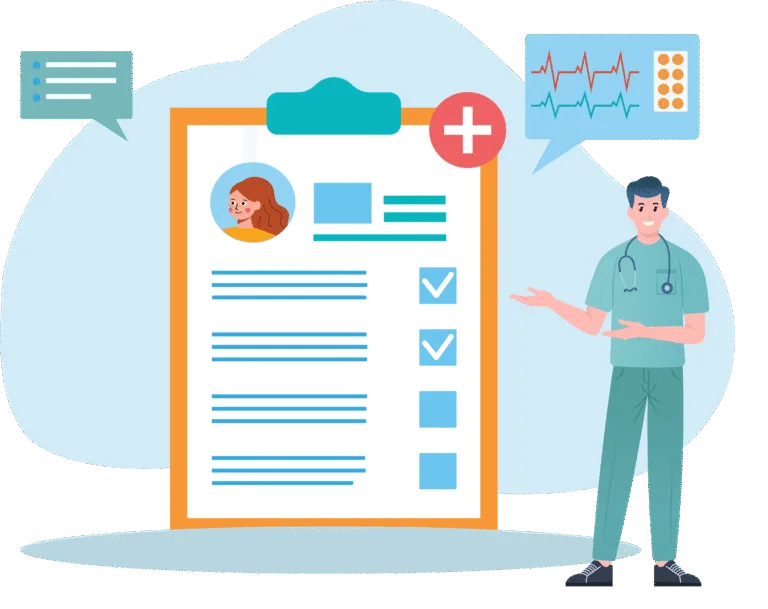
A CBD is a focused, 15- to 20-minute conversation between a trainer and a trainee about a real clinical case the trainee managed personally.
Far from a casual hallway chat, this structured assessment anchors directly in actual documentation: medical charts, admission notes, discharge summaries, lab results, or imaging orders. Together, the trainee and trainer explore how medical knowledge was applied and why a specific management plan was chosen.
The goal is never to quiz memorized textbook facts, but to answer one central question: why did the trainee make this specific decision for this specific patient?
Curricular role: uncovering clinical reasoning
Within the EPA framework, entrusting a trainee with unsupervised responsibility requires confidence in their decision-making, especially when guidelines do not offer a clear-cut answer.
A CBD adds unique value here by:
- Evaluating invisible cognitive steps: Direct observation checks how a trainee takes a history or performs an exam. A CBD reveals why: how the trainee built a differential diagnosis, interpreted conflicting test results, or weighed treatment risks.
- Capturing high-stakes, unobserved moments: Critical decisions often happen during night shifts, complex multidisciplinary care, or sudden patient deterioration when trainers are not watching. A CBD brings these demanding cases into the light for structured review feedback.
- Exploring ethical and professional judgment: Reviewing cases retrospectively creates space to discuss shared decision-making, consent, end-of-life care, cost-effectiveness, and hospital policy.
- Supporting EPA entrustment decisions: Evidence from a CBD directly informs milestone evaluations and backs up entrustment decisions for complex clinical EPAs—like managing multi-morbid patients or leading end-of-life care plans.
How a CBD works in practice
Because a CBD happens after the patient encounter, its setup differs from live observational assessments:
1. The trainee leads case selection
Typically, the trainee brings two or three cases they personally documented, and the trainer picks one for assessment. The best cases are not routine presentations where everything went smoothly, but situations characterized by diagnostic ambiguity, ethical dilemmas, or clinical complexity.
2. Focused evaluation domains
Rather than ticking off basic administrative boxes, the trainer probes five core areas:
- Medical record keeping: Are the trainee’s notes, differential diagnoses, and orders clear, accurate, and defensible?
- Diagnostic formulation: Did the trainee prioritize both the most likely and the most dangerous diagnoses, and can they explain why?
- Investigation and management: Did the trainee order tests judiciously, interpret results accurately, and choose an evidence-based plan?
- Treatment monitoring and follow-up: How did the trainee anticipate complications, evaluate therapy response, and adapt when the patient’s condition shifted?
- Professionalism and ethics: How did the trainee factor in the patient’s preferences, comorbidities, social context, and health literacy?
3. Actionable feedback and portfolio documentation.
A CBD only drives real growth when the conversation leads to clear takeaways. To wrap up the session, the trainer highlights what the trainee did well, pinpoints specific gaps in clinical reasoning, and recommends an entrustment level for the relevant EPA. Together, they agree on one or two concrete learning goals for future cases and log the summary directly in the trainee’s portfolio, turning a single retrospective discussion into lasting clinical development.

Bringing observation and reflection together
A strong WBA program balances real-time observation with reflective dialogue. While the mini-CEX and DOPS show what a trainee can do at the bedside, the Case-Based Discussion sharpens the clinical judgment behind every prescription, referral, and care plan. Making structured CBDs a regular habit ensures trainees develop not just the skills to act, but the wisdom to decide.
